Binary Stars: A Cosmic Dance on a Universal Scale
The cosmic ballet of binary stars has captivated astronomers for centuries. These celestial partnerships, where two stars orbit a common center of mass, reveal profound truths about stellar evolution and the dynamic nature of our universe. Unlike our solitary Sun, most stars in the Milky Way have companions, making binary systems the rule rather than the exception in the grand stellar population.
Through the lens of history, we find that the recognition of binary stars marked a pivotal moment in astronomy. In 1802, William Herschel first documented pairs of stars orbiting each other, shattering the ancient belief that stars were fixed and independent. Today, advanced telescopes and spectroscopic techniques allow us to study these systems in exquisite detail, uncovering their complex gravitational dances across light-years.
The formation of binary systems begins in stellar nurseries - vast clouds of gas and dust where gravity works its magic. As these clouds collapse, turbulent motions often cause the fragmentation of protostellar material, giving birth to multiple stars rather than single ones. The separation between these stellar siblings can vary dramatically, from systems where the stars nearly touch to pairs separated by distances comparable to our solar system's size.
Close binary systems present some of the most dramatic interactions in stellar astrophysics. When stars orbit extremely close to one another, their gravitational fields can distort each other's shapes, creating teardrop forms known as Roche lobes. In some cases, one star may begin transferring material to its companion through a process called mass transfer, leading to spectacular phenomena like accretion disks and periodic outbursts.
Eclipsing binaries offer astronomers particularly valuable laboratories for study. As these systems orbit edge-on from our perspective, they periodically eclipse each other, causing characteristic dips in brightness. By carefully analyzing these light curves, scientists can determine precise measurements of stellar masses, radii, temperatures, and even atmospheric compositions - data that would be nearly impossible to obtain from single stars.
The life cycles of binary stars diverge significantly from their solitary counterparts. Stellar evolution in these systems becomes a complex interplay of nuclear processes and gravitational interactions. When one star in a binary system exhausts its nuclear fuel and expands into a red giant, the consequences for its companion can be dramatic. The expanding star may engulf its partner, or the companion may strip away the giant's outer layers, altering both stars' evolutionary paths.
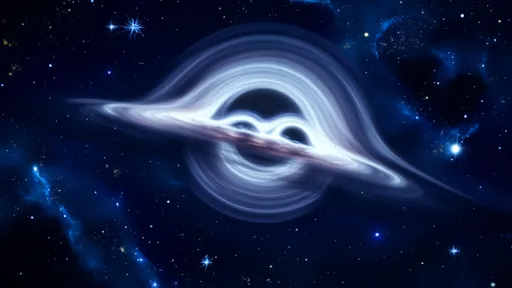
Some binary systems produce the most energetic events in the universe. When massive binary stars end their lives in supernova explosions, the surviving neutron star or black hole may remain bound to its companion. These systems often become powerful X-ray sources as the compact object accretes matter from its partner. In rare cases, two neutron stars may spiral together and collide, producing gravitational waves and kilonova explosions that forge heavy elements like gold and platinum.
The study of binary stars has profound implications for our understanding of cosmic distances. Certain types of eclipsing binaries serve as "standard candles" - celestial objects with known intrinsic brightness that allow astronomers to measure distances across intergalactic space. These measurements help calibrate the cosmic distance ladder and refine our knowledge of the universe's expansion rate.
Modern astronomical surveys have revealed binary systems with properties that challenge conventional theories. From contact binaries that share atmospheres to pairs with wildly mismatched compositions, each discovery pushes the boundaries of stellar physics. The Kepler space telescope alone discovered thousands of eclipsing binary systems during its mission, providing an unprecedented statistical sample for researchers to analyze.
As observational techniques improve, astronomers are finding that binary interactions may be responsible for many peculiar stellar phenomena once thought to be rare. The mysterious blue straggler stars - older stars that appear younger due to their unusual blue color and high mass - are now understood to often result from binary interactions that either transfer fresh hydrogen fuel or trigger stellar mergers.
The gravitational wave era has opened new windows into binary star research. LIGO's detections of merging black holes and neutron stars have confirmed that binary systems can survive even the most violent stellar deaths. These observations provide direct evidence for processes that were previously only theoretical, revolutionizing our understanding of compact object formation and evolution.
Looking to the future, next-generation telescopes like the Extremely Large Telescope (ELT) and space-based observatories will enable detailed studies of binary systems in distant galaxies. By comparing binary populations across different galactic environments and cosmic epochs, astronomers hope to uncover how these systems influence galactic evolution and chemical enrichment over billions of years.
Binary stars continue to surprise us with their diversity and complexity. From the delicate gravitational waltz of wide binaries to the violent tango of merging compact objects, these systems embody the dynamic nature of our universe. As we refine our models and expand our observational capabilities, each discovery reminds us that in the cosmic dance of gravity and light, binary stars will always hold center stage.