Ice Window Crystal Flowers: The Bitter Cold of -20°C Winter

Jul 30, 2025 By

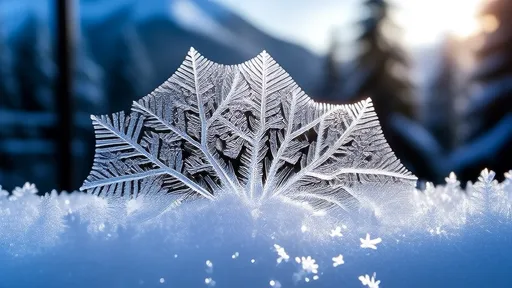
The world outside is a frozen canvas, painted with delicate strokes of frost and ice. When temperatures plummet to -20°C, nature unveils one of its most mesmerizing winter wonders: the ice window flower, or "ice fern" as it's sometimes called. These intricate crystalline formations appear on glass surfaces, transforming ordinary windows into breathtaking works of art.

A Dance of Temperature and Humidity

The creation of ice window flowers is a delicate ballet between extreme cold and moisture in the air. When warm, humid indoor air meets the freezing surface of a windowpane, the water vapor sublimates directly into ice crystals. Unlike ordinary frost which forms randomly, these crystals grow in fractal patterns that resemble ferns, feathers, or delicate lacework. The specific patterns depend on microscopic imperfections in the glass surface, air currents, and subtle temperature variations across the window.

Scientists refer to this phenomenon as "crystallization on a constrained surface." The ice crystals can't grow freely in three dimensions as they would in open air, so they spread laterally along the glass, creating those characteristic flat, branching patterns. The most spectacular displays occur during prolonged cold spells when temperatures remain steadily below -15°C and humidity levels are just right—not too dry to prevent crystal formation, nor too humid which would cause fogging instead.

The Ephemeral Art Gallery

What makes ice window flowers particularly magical is their transient nature. Like snowflakes, no two formations are exactly alike, and like morning dew, they disappear when conditions change. A sudden rise in temperature, direct sunlight, or even a curious finger tracing the glass can make an entire crystalline masterpiece vanish in moments. This fleeting quality has made them subjects of folk tales across cold regions—some cultures believe they're messages from winter spirits, others see them as frost fairies' fingerprints.

Photographers in northern countries often brave the bitter cold to document these natural artworks. The best specimens are usually found on single-pane windows in older buildings, where the temperature differential is most pronounced. Modern double-glazed windows, while energy efficient, rarely produce such spectacular displays because their interior surfaces stay relatively warm.

Historical Observations and Scientific Study

References to ice flowers appear in historical records as far back as the 17th century. Robert Hooke included sketches of frost patterns in his 1665 book "Micrographia," marveling at their geometric perfection. In the 19th century, German physicist Johann Wilhelm Ritter conducted systematic studies, discovering that electricity could influence their growth patterns—a phenomenon now understood as electrostatic effects on water molecule alignment during freezing.

Modern research uses ice window flowers to study broader crystallization processes. Materials scientists examine them to understand how molecular structures scale up to visible patterns, while climatologists analyze historical accounts of frost formations to reconstruct past winter conditions. There's even speculative research about whether similar crystallization processes might occur on other planets or moons with icy surfaces.

Cultural Echoes in Art and Literature

The ethereal beauty of ice window flowers has inspired creators across mediums. Russian composer Igor Stravinsky wrote in his memoirs about watching frost patterns form during winter mornings in St. Petersburg, later translating their intricate rhythms into musical passages. Japanese haiku poets frequently use "shimobashira" (frost pillars) as seasonal references, while Scandinavian folk art often incorporates similar symmetrical patterns in textiles and woodcarvings.

In visual arts, the patterns have influenced everything from Art Nouveau metalwork to contemporary digital art. Some glassmakers even attempt to recreate the effect through acid etching or laser engraving, though the results lack the organic spontaneity of true ice formations. Perhaps the most poignant cultural reflection appears in northern indigenous traditions, where elders teach that observing frost patterns cultivates patience—since rushing to touch them only makes them disappear.

Disappearing Acts in a Warming World

As global temperatures rise, sightings of elaborate ice window flowers are becoming rarer. Regions that once regularly experienced -20°C winters now see fewer deep freezes, and improved home insulation means fewer cold window surfaces for crystals to form. Some climate researchers have begun documenting frost patterns as indirect indicators of changing winter conditions, much like how certain plants' blooming times track seasonal shifts.

This gradual disappearance adds another layer of poignancy to these frozen masterpieces. They serve as reminders of winter's raw beauty—beauty that exists precisely because conditions are harsh. Like polar ice caps and glaciers, ice window flowers may eventually become climate change casualties, surviving only in photographs and memories of those who witnessed their crystalline splendor.

For now, when the mercury plunges and your breath hangs frozen in the air, take a moment to examine your windows. You might find nature has gifted you a private exhibition of ephemeral art—a silent, sparkling reminder that even in life's coldest moments, beauty finds a way to bloom.
Recommend Posts
Romance

Tea Cup Glaze Marks: The Ceramic Memory of Palm Warmth"

By /Jul 30, 2025

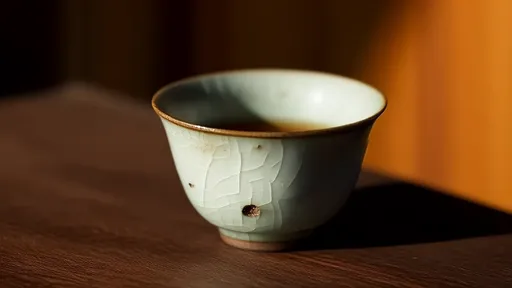
In the quiet corners of antique shops or nestled within the curated displays of modern ceramic studios, teacups often bear witness to the passage of time. Their glazes—sometimes cracked, sometimes luminous—hold stories not just of the kiln’s fire, but of the hands that have cradled them. The relationship between human touch and ceramic form is an intimate dance, one that leaves behind invisible fingerprints on both the object and the memory.
Romance

Reading Companion: Titanium Alloy Legs of the Old-Fashioned Glasses"

By /Jul 30, 2025

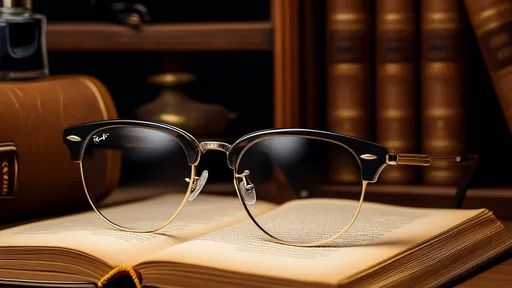
In a world increasingly dominated by digital screens, the humble reading glass has remained a steadfast companion for those who cherish the tactile pleasure of printed pages. Among the myriad options available today, a particular category has emerged as a favorite among discerning readers—reading glasses with titanium temples. These aren’t just functional aids; they’re a blend of engineering precision and aesthetic subtlety, designed to endure the test of time.
Romance

Shoelace Cipher: The Secret Language of Everyday Knots"

By /Jul 30, 2025

In the bustling streets of any modern city, the humble shoelace goes unnoticed—a functional necessity, nothing more. Yet beneath this unassuming facade lies a clandestine communication system older than Morse code. From sailors to soldiers, hobos to hackers, the art of tying knots has long served as an unspoken lexicon for those who know how to read the twists and turns.
Romance

Rocking Chair Harmonics: The Wooden Resonance of Dusk Years"

By /Jul 30, 2025

The wooden rocking chair creaks softly in the corner of the sunlit room, its rhythmic swaying a quiet testament to decades of use. This is no ordinary piece of furniture—it carries within its grain the whispers of time, a resonant frequency that harmonizes with the twilight years of human existence. The Rocking Chair Harmonic: The Twilight Resonance of Wood explores this peculiar intersection of material longevity and human aging, where the vibrations of oak and maple synchronize with the slowing pulse of elderly occupants.
Romance

Dark Matter: The Invisible Emotional Gravity"

By /Jul 30, 2025

In the vast expanse of the cosmos, dark matter remains one of the most elusive mysteries. It doesn’t emit light, reflect it, or interact with electromagnetic forces, yet its gravitational pull dictates the movement of galaxies. Similarly, in the human experience, there exists an intangible force—emotional dark matter—that, though invisible, exerts a profound influence on our decisions, relationships, and sense of self.
Romance

Wheelchair Ramp Slope: Consideration for Inclined Surfaces

By /Jul 30, 2025

The gentle slope of a ramp is more than just an architectural feature—it is a silent promise of inclusion. For individuals who rely on wheelchairs, the design of inclined surfaces can mean the difference between independence and frustration. Too steep, and the ramp becomes an obstacle; too shallow, and it may occupy unnecessary space. The art of creating accessible pathways lies in balancing practicality with empathy, ensuring that every angle serves a purpose.
Romance

Time Imprints: The Cross-Section of Wood"

By /Jul 30, 2025

The cross-section of a tree trunk tells a story far richer than its rings might suggest. Each concentric circle, often mistaken as mere markers of age, actually encodes climatic dramas, ecological shifts, and silent battles against drought or disease. Scientists now read these arboreal archives with tools rivaling forensic technology, extracting data that rewrites our understanding of environmental history.
Romance

Scarf Topology: The Warm Embrace of Cashmere"

By /Jul 30, 2025

The scarf, a seemingly simple accessory, has long transcended its utilitarian roots to become a symbol of both fashion and comfort. Among the myriad materials available, cashmere stands out as the epitome of luxury and warmth. Its delicate fibers, sourced from the undercoat of Himalayan goats, create a fabric that is as soft as it is insulating. The topology of a scarf—how it wraps, drapes, and knots—plays a crucial role in its functionality and aesthetic appeal. This interplay between material and form is what makes the cashmere scarf a timeless piece in any wardrobe.
Romance

Gravitational Waves: Resonance of Spacetime Ripples

By /Jul 30, 2025

The detection of gravitational waves stands as one of the most profound scientific achievements of the 21st century, confirming a century-old prediction by Albert Einstein and opening an entirely new window onto the universe. These ripples in the fabric of spacetime, generated by cataclysmic cosmic events, carry secrets of black holes, neutron stars, and the very nature of gravity itself. The journey to capture these elusive signals has been a testament to human ingenuity, perseverance, and the relentless pursuit of knowledge.
Romance

Palmar Temperature Conservation: Thermodynamics at 36.5°C"

By /Jul 30, 2025

In the quiet hum of human biology, there exists a subtle yet profound constant—the palm temperature of 36.5°C. This unassuming number, often overlooked in the grand narrative of thermodynamics, holds secrets that bridge the gap between physiology and physics. The human hand, a marvel of evolutionary engineering, maintains this thermal equilibrium with remarkable precision, defying the chaos of external environments. It is a silent testament to the body’s ability to regulate, adapt, and persist.
Romance

Pill Blister Packaging: The Dawn and Dusk of Aluminum Foil Bubbles"

By /Jul 30, 2025

The pharmaceutical industry has long relied on blister packaging as a stalwart guardian of medication integrity. Among these, aluminum foil blisters stand as both a marvel of engineering and a testament to the delicate dance between preservation and accessibility. Their existence marks the intersection of dawn and dusk in drug packaging—where the promise of morning meets the shadows of evening in every pressed cavity.
Romance

Key Tooth Pattern: Trust in Metal Grooves"

By /Jul 30, 2025

The humble key, an unassuming piece of metal with precisely milled grooves, carries the weight of human trust in its teeth. For centuries, these intricate patterns have served as silent guardians, determining who may cross the threshold of homes, vaults, and private spaces. The relationship between key and lock represents one of civilization's oldest and most persistent metaphors for security, access, and the delicate balance between convenience and protection.
Romance

Quantum Tunneling: The Probability of Crossing the Wall of the Heart

By /Jul 30, 2025

In the strange and counterintuitive world of quantum mechanics, particles occasionally perform what seems like magic—they pass through barriers that, by all classical accounts, should be impenetrable. This phenomenon, known as quantum tunneling, isn’t just a quirk of subatomic particles. Some physicists and philosophers have drawn metaphorical parallels between this quantum behavior and the human experience of emotional barriers. Could the probabilistic nature of tunneling offer insight into how we navigate the walls we build around ourselves?
Romance

Ice Window Crystal Flowers: The Bitter Cold of -20°C Winter

By /Jul 30, 2025

The world outside is a frozen canvas, painted with delicate strokes of frost and ice. When temperatures plummet to -20°C, nature unveils one of its most mesmerizing winter wonders: the ice window flower, or "ice fern" as it's sometimes called. These intricate crystalline formations appear on glass surfaces, transforming ordinary windows into breathtaking works of art.
Romance

Quantum Entanglement: Particle Sensing Replaces Commitment

By /Jul 30, 2025

The world of quantum mechanics has always been a playground for the bizarre, where particles defy classical intuition and logic. Among its most enigmatic phenomena is quantum entanglement—a connection so profound that Albert Einstein famously dismissed it as "spooky action at a distance." Yet, decades later, scientists not only confirm its existence but also push its boundaries, revealing a reality where particles "sense" each other’s states instantaneously, transcending the need for promises or communication.
Romance

Crackling Glaze: The Star Map of Golden Lines"

By /Jul 30, 2025

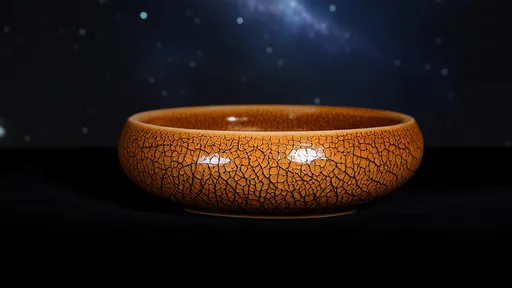
In the quiet stillness of a kiln, where fire and earth embrace, an ancient alchemy unfolds. The art of crackle glazing, known as "kai pian" in Chinese ceramics, transforms humble clay vessels into celestial canvases. These intricate networks of fissures, often accentuated with gold, resemble nothing so much as constellations mapped across the curved surfaces of bowls and vases. For centuries, artisans have pursued these accidental stars, learning to harness the unpredictable beauty of cracking glaze into deliberate artistry.
Romance

Hearing Aids: The Tenderness of Sound Wave Filtering

By /Jul 30, 2025

In a world where silence often speaks louder than words, the gentle hum of technology has emerged as an unexpected ally. Hearing aids, once clunky and conspicuous, have evolved into sophisticated instruments that filter sound waves with remarkable precision. They are no longer just amplifiers; they are interpreters of the auditory world, delicately balancing clarity and comfort for those who rely on them.
Romance

Binary Stars: A Cosmic Dance on a Universal Scale

By /Jul 30, 2025

The cosmic ballet of binary stars has captivated astronomers for centuries. These celestial partnerships, where two stars orbit a common center of mass, reveal profound truths about stellar evolution and the dynamic nature of our universe. Unlike our solitary Sun, most stars in the Milky Way have companions, making binary systems the rule rather than the exception in the grand stellar population.