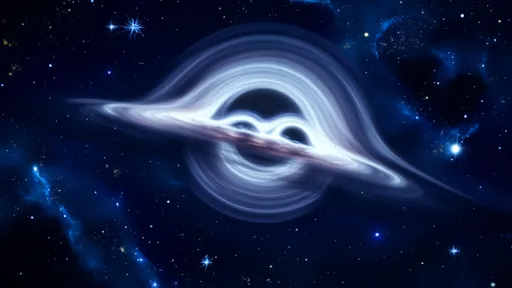
Dark Matter: The Invisible Emotional Gravity"
In the vast expanse of the cosmos, dark matter remains one of the most elusive mysteries. It doesn’t emit light, reflect it, or interact with electromagnetic forces, yet its gravitational pull dictates the movement of galaxies. Similarly, in the human experience, there exists an intangible force—emotional dark matter—that, though invisible, exerts a profound influence on our decisions, relationships, and sense of self.
Much like astrophysicists who infer the presence of dark matter through its gravitational effects, psychologists and philosophers have long observed the unseen emotional currents that shape human behavior. These forces—unspoken expectations, buried traumas, silent longings—operate beneath the surface of conscious thought, pulling us in directions we don’t always understand.
The Weight of Unspoken Words
Consider the way a single unspoken resentment can alter the course of a decades-long friendship. No argument is voiced, no confrontation occurs, yet the relationship shifts. The emotional dark matter at work here is the accumulation of unsaid feelings, the gravitational pull of withheld communication. Over time, these unexpressed emotions bend the trajectory of connection, creating distance or tension where none was visibly present.
Families often orbit around such emotional dark matter. The child who grows up sensing but never being told about a parent’s disappointment develops life strategies to compensate for this invisible force. The adult who can’t articulate why they feel unworthy may be responding to childhood experiences they’ve forgotten but whose gravitational imprint remains.
The Phantom Pain of Absence
Just as dark matter’s existence was first hypothesized because galaxies moved as if influenced by unseen mass, our emotional lives often move in response to invisible presences. The ghost of a lost loved one continues to shape decisions years after their passing. The shadow of a missed opportunity lingers, bending subsequent choices like light around a hidden cosmic body.
This phenomenon appears most starkly in cases of ambiguous loss—when someone is physically absent but psychologically present (like missing persons) or physically present but psychologically absent (as in dementia). The emotional dark matter of their incomplete absence/presence creates a peculiar gravity that distorts the emotional spacetime of those connected to them.
Cultural Dark Matter
On a societal level, emotional dark matter manifests as the unspoken rules and invisible expectations that govern behavior. Every culture has its own version—the Japanese concept of honne and tatemae (true feelings versus public facade), the English “stiff upper lip,” or the Mediterranean emphasis on familial honor. These are the dark matter halos surrounding cultural interactions, unseen but powerfully determining the orbits of social behavior.
Institutions similarly generate their own emotional dark matter. Corporations develop unspoken codes about what constitutes “leadership material” that have little to do with official policies. Schools perpetuate invisible curricula about who belongs in advanced classes. Like cosmic dark matter shaping galactic rotation curves, these unseen forces mold individual trajectories through institutional spaces.
The Gravity of Collective Trauma
Historical events leave behind emotional dark matter that influences generations. The descendants of Holocaust survivors, slavery, or genocide victims often experience what psychologists call intergenerational trauma—an invisible gravitational pull from events they never directly experienced. Similarly, collective triumphs (civil rights victories, moon landings) create positive emotional dark matter that lifts subsequent generations.
This explains why certain dates on the calendar carry emotional weight even for those born long after the events they commemorate. The gravitational pull of 9/11, for instance, continues to shape American emotional landscapes much like a massive but unseen celestial body warps the space around it.
Mapping the Invisible
If emotional dark matter is so influential, how do we detect and navigate it? Psychotherapy acts as a kind of emotional telescope, helping individuals perceive the unseen forces bending their life paths. Mindfulness practices develop sensitivity to subtle emotional gravities. Art and literature serve as dark matter detectors, making visible through metaphor what otherwise remains hidden.
Recent advances in neuroscience are beginning to identify the biological correlates of these phenomena. The way implicit memories form neural pathways, how trauma alters brain chemistry, the physiological impact of suppressed emotions—we’re slowly developing the instruments to measure emotional dark matter’s fingerprints.
The Paradox of Awareness
Here lies the paradox: the moment we shine light on emotional dark matter, it begins to transform. Giving voice to unspoken family rules diminishes their power. Articulating buried grief loosens its gravitational hold. This is why talk therapy proves effective—it converts dark matter into visible, manageable forms.
Yet total conversion is impossible. Like the universe where ordinary matter constitutes just 15% of all mass, our emotional lives will always contain unseen influences. The goal isn’t elimination but navigation—learning to sense these forces and adjust our trajectories accordingly.
Dark Matter as Creative Force
We often assume invisible emotional forces only create problems, but consider how they enable human connection. Empathy operates largely through sensing what isn’t said. Intuition reads emotional dark matter. Love itself may be the most powerful dark matter of all—invisible, immeasurable by conventional instruments, yet unmistakable in its effects.
Artists have always worked with emotional dark matter. A great novel’s power lies in what’s implied rather than stated. Music conveys emotions that resist verbal expression. The silent spaces between notes, the blank areas of a painting—these are the dark matter components of artistic creation.
Living With the Invisible
As we advance in our understanding of cosmic dark matter, we might gain insights into our emotional equivalents. Perhaps one day we’ll have an emotional equivalent of gravitational wave detectors—tools to map the unseen forces bending our inner lives. Until then, we navigate by their effects, learning to read the subtle distortions in our emotional spacetime.
The healthiest approach may be neither denial nor obsession with these invisible forces, but rather a respectful acknowledgment of their presence. Like sailors accounting for ocean currents or pilots adjusting for wind shear, we can learn to recognize emotional dark matter’s pull without being controlled by it. In doing so, we become better captains of our own lives, even in waters where unseen depths remain.