Tea Cup Glaze Marks: The Ceramic Memory of Palm Warmth"
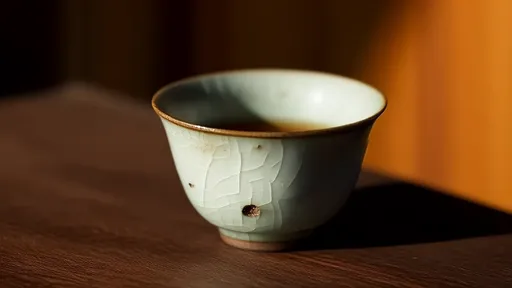
In the quiet corners of antique shops or nestled within the curated displays of modern ceramic studios, teacups often bear witness to the passage of time. Their glazes—sometimes cracked, sometimes luminous—hold stories not just of the kiln’s fire, but of the hands that have cradled them. The relationship between human touch and ceramic form is an intimate dance, one that leaves behind invisible fingerprints on both the object and the memory.
To hold a teacup is to engage in a tactile conversation. The weight of the clay, the texture of the glaze, the way the rim meets the lips—these are sensations that transcend mere utility. The Japanese practice of kintsugi, where broken pottery is mended with gold lacquer, speaks to this very idea: that flaws and repairs are not to be hidden but celebrated as part of the object’s history. A teacup’s glaze, then, becomes a canvas for both the artisan’s intent and the user’s accidental contributions.
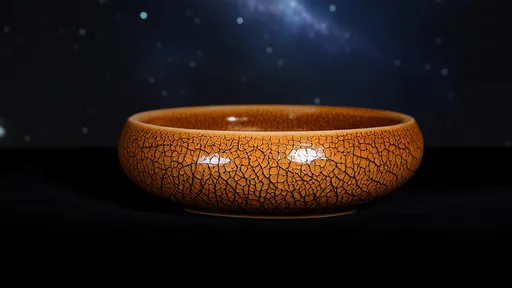
The chemistry of glaze is a science, but its application is an art. When a potter brushes glaze onto a raw clay body, they are not just applying a protective coating; they are setting the stage for a transformation. The kiln’s heat—often exceeding 1200°C—melts the glaze into a glass-like surface, but the final appearance is never entirely predictable. Variations in temperature, the thickness of the application, and even the composition of the clay can result in subtle differences. These imperfections, far from being defects, become the teacup’s unique signature.
Over time, the glaze of a well-loved teacup begins to change. The oils from countless fingertips, the microscopic scratches from stirring spoons, the faint stains left by tea or coffee—all these contribute to a patina that no artisan could replicate. In this way, the teacup becomes a living record of its use. The glaze, once pristine, now tells a story of shared moments: morning rituals, afternoon conversations, solitary reflections.
Ceramicists often speak of the memory of clay. Just as clay retains the impression of the potter’s hands, so too does it hold the warmth of those who later hold the finished piece. This idea is particularly poignant in the context of teacups, which are so often associated with hospitality and connection. A cup passed from one generation to another carries with it not just the glaze applied in the studio, but the accumulated warmth of every hand it has ever known.
In an age of mass production, the handmade teacup stands as a quiet rebellion. It is an object that refuses to be anonymous, that insists on its individuality. The variations in glaze—a drip here, a pooling there—are reminders that this cup was touched by human hands at every stage of its creation. To choose such a cup is to choose a slower, more intentional way of living, one that values the marks of time rather than fearing them.
The next time you lift a teacup, take a moment to consider its glaze. Notice how the light catches its surface, how the colors shift depending on the angle. Think of the hands that shaped it, the fire that hardened it, and the countless sips that have warmed it. In these small, everyday objects, we find a profound connection to the past—and a reminder that beauty often lies in the traces we leave behind.