Bach's Unaccompanied Technical Code

Jul 25, 2025 By

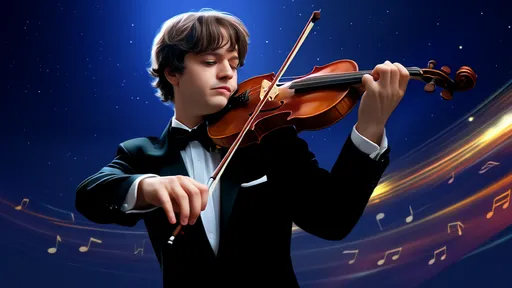
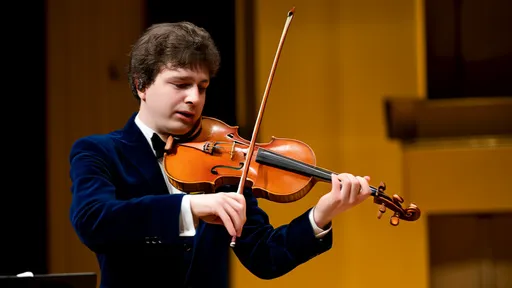
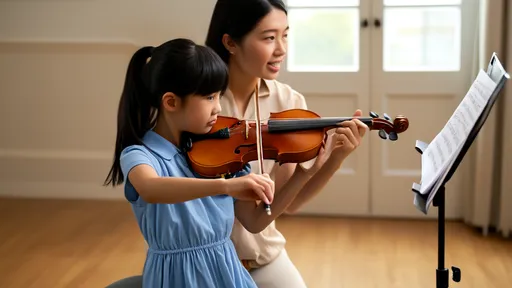
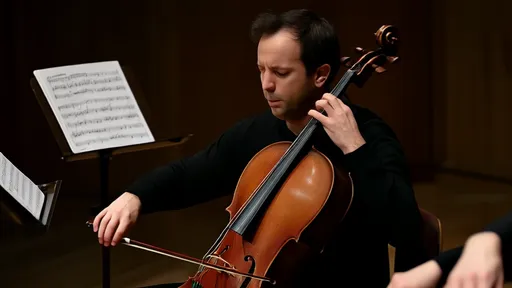
The enigma of Bach’s unaccompanied works has fascinated musicians and scholars for centuries. These compositions, particularly the sonatas and partitas for solo violin and the cello suites, are often regarded as the pinnacle of technical and artistic achievement in Western classical music. Yet, beneath their sublime beauty lies a labyrinth of technical challenges that demand not only virtuosic skill but also profound interpretive insight. To unlock the secrets of these works is to engage with a musical language that transcends mere notes on a page.

The architecture of Bach’s unaccompanied pieces is both mathematical and deeply expressive. Each movement is constructed with meticulous care, balancing polyphonic complexity with melodic clarity. The solo violin works, for instance, require the performer to imply multiple voices where only one exists—a feat achieved through bowing techniques, dynamic shading, and precise articulation. Similarly, the cello suites exploit the instrument’s range and resonance to create the illusion of harmonic accompaniment. The genius of Bach lies in his ability to weave these elements into a cohesive whole, leaving performers to decipher the hidden counterpoint and implied harmonies.

One of the most daunting aspects of these works is their demand for absolute technical control. Violinists must navigate intricate chordal passages, rapid string crossings, and contrapuntal lines that test the limits of finger independence. Cellists, on the other hand, face the challenge of maintaining clarity in bass lines while simultaneously bringing out inner voices. The absence of an accompanist means there is no room for error; every note must be placed with intention, and every phrase must breathe with purpose. It is this uncompromising standard that makes Bach’s unaccompanied repertoire a rite of passage for serious musicians.

Beyond the physical demands, Bach’s music requires an intellectual engagement that goes beyond rote memorisation. Performers must grapple with questions of phrasing, tempo, and ornamentation, often with little guidance from the score. The manuscripts, though remarkably precise for their time, leave much to the interpreter’s discretion. Should a particular passage be played legato or detached? How much rubato is appropriate in a sarabande? These decisions are not merely stylistic—they shape the very essence of the music, revealing the performer’s understanding of Bach’s language.

The spiritual dimension of Bach’s unaccompanied works cannot be overlooked. Written during his tenure in Köthen, these pieces emerge from a period of relative secularity in Bach’s life, yet they are imbued with a profound sense of devotion. The chaconne from the Partita No. 2, for example, is often interpreted as a meditation on grief and transcendence. To play it convincingly, a violinist must channel not only technical mastery but also emotional depth. The same applies to the cello suites, where the dance movements—allemandes, courantes, gigues—are more than mere formal exercises; they are expressions of human joy, sorrow, and resilience.

Modern performers continue to uncover new layers of meaning in these works. Some approach them with historical fidelity, using period instruments and Baroque bows to recreate the sound world Bach would have known. Others embrace contemporary techniques, pushing the boundaries of expression and virtuosity. Regardless of the approach, the enduring appeal of Bach’s unaccompanied music lies in its universality. It speaks to listeners and performers across time and culture, offering endless possibilities for interpretation and rediscovery.

Ultimately, the technical密码 of Bach’s unaccompanied works is not a puzzle to be solved but a journey to be undertaken. Each performance is a dialogue between the past and the present, between the composer’s intentions and the performer’s voice. To play Bach is to confront one’s own limitations and aspirations, to strive for a balance between discipline and freedom. In this sense, the music remains as vital today as it was three centuries ago—a testament to Bach’s unparalleled genius and the timeless power of his art.
Recommend Posts
Music

Tone Correction for Beginners Learning Violin

By /Jul 25, 2025

Learning to play the violin is a journey filled with both excitement and challenges. Among the many hurdles beginners face, achieving proper intonation—or playing in tune—is one of the most critical yet difficult skills to master. Unlike fretted instruments, the violin requires precise finger placement to produce accurate pitches, making ear training and muscle memory essential components of early practice. For those just starting, the process of correcting pitch can feel overwhelming, but with patience and the right techniques, it becomes an achievable goal.
Music

Bach's Unaccompanied Technical Code

By /Jul 25, 2025

The enigma of Bach’s unaccompanied works has fascinated musicians and scholars for centuries. These compositions, particularly the sonatas and partitas for solo violin and the cello suites, are often regarded as the pinnacle of technical and artistic achievement in Western classical music. Yet, beneath their sublime beauty lies a labyrinth of technical challenges that demand not only virtuosic skill but also profound interpretive insight. To unlock the secrets of these works is to engage with a musical language that transcends mere notes on a page.
Music

Bass Figured Bass Performance Standards

By /Jul 25, 2025

Figured bass, also known as thoroughbass or basso continuo, represents one of the most distinctive features of Baroque music. This system of musical shorthand provided performers with a framework for improvisation while allowing composers to outline harmonic progressions without specifying every note. The practice of realizing figured bass requires not only technical skill but also a deep understanding of historical conventions and stylistic nuances.
Music

Rachmaninoff's Chord Treatment

By /Jul 25, 2025

Few musical gestures carry as much instant recognition—or as much emotional weight—as the so-called "Rachmaninoff chord." This distinctive harmonic formation, often a densely stacked minor ninth or an augmented eleventh, functions as a kind of aural fingerprint for the Russian composer. Yet to reduce it to a mere technical quirk would be to miss its profound role in shaping the soundworld of late Romanticism’s twilight years. The chord operates as both a bridge and a rupture: a bridge between Tchaikovskian pathos and early modernist dissonance, and a rupture in the very fabric of tonal harmony as it was understood in the early 20th century.
Music

Russian School's Dynamic Handling

By /Jul 25, 2025

The Russian school of piano playing has long been revered for its distinctive approach to dynamic control, a tradition rooted in the meticulous balance between technical precision and emotional depth. Unlike Western interpretations that often prioritize clarity and evenness, the Russian method embraces a more fluid, sometimes volatile relationship with volume and intensity. This philosophy stems from the 19th-century lineage of Anton Rubinstein and later perfected by pedagogues like Heinrich Neuhaus, who treated dynamics not as mere notations but as living elements of musical storytelling.
Music

Relaxation Techniques for Piano Octaves

By /Jul 25, 2025

Mastering the art of playing octaves on the piano requires not only precision and strength but also a deep understanding of relaxation techniques. Many pianists, especially those in the early stages of their development, struggle with tension when executing octave passages. This tension often leads to fatigue, unevenness, and even injury over time. The key to fluid and effortless octave playing lies in cultivating a balanced approach that combines controlled power with deliberate relaxation.
Music

Interpretation of Special Notation in Modern Notation

By /Jul 25, 2025

Modern musical notation is a complex language that extends far beyond the basic staff, clefs, and notes. Among its most intriguing aspects are the special symbols that provide performers with nuanced instructions on how to interpret a piece. These symbols, often overlooked by casual readers, serve as the composer’s direct communication with the musician, offering insights into articulation, dynamics, and expression. Understanding them is essential for any serious musician aiming to deliver an authentic performance.
Music

The Historical Evolution and Differences of Ornamentation

By /Jul 25, 2025

The history of ornamental notes in music is a fascinating journey through time, reflecting the evolving tastes, techniques, and cultural contexts of different eras. From the elaborate flourishes of the Baroque period to the restrained elegance of the Classical era, and the expressive freedom of the Romantic age, ornamentation has always been a vital element of musical expression. Its interpretation and execution have varied widely, shaped by the stylistic conventions and performance practices of each epoch.
Music

Differences in Touch Techniques of the German-Austrian Piano School

By /Jul 25, 2025

The distinction between the German and Austrian piano schools, particularly in their approaches to touch and tone production, remains a fascinating subject for pianists and musicologists alike. While both traditions share common roots in the Central European classical tradition, their nuanced differences in technique and philosophy have shaped generations of performers. These variations extend beyond mere stylistic preferences, reflecting deeper cultural and pedagogical divergences that continue to influence piano playing today.
Music

Rhythm Restoration in Chinese Gugong Music Notation

By /Jul 25, 2025

The ancient Chinese musical notation system known as Gongchepu has long fascinated scholars and musicians alike. Unlike Western notation, which relies on a staff and clefs, Gongchepu uses Chinese characters to represent pitch and employs a unique set of symbols to indicate rhythm. The system, which dates back to the Tang Dynasty, was widely used in traditional Chinese opera and ensemble music. Today, there is a growing interest in reconstructing and performing music based on Gongchepu manuscripts, a process that involves deciphering its rhythmic codes to bring centuries-old compositions back to life.
Music

Technical Difficulties in Chopin's Etudes

By /Jul 25, 2025

The technical demands of Chopin’s Études place them among the most challenging works in the piano repertoire. Each of these twenty-seven pieces is a masterclass in combining artistic expression with virtuosic difficulty. Unlike many technical studies that prioritize mechanical repetition, Chopin’s Études are poetic and musically rich, requiring the pianist to navigate intricate passages while maintaining lyrical phrasing and emotional depth. The left-hand arpeggios in Op. 10, No. 1, for instance, demand not only agility but also a singing tone, transforming what could be a dry exercise into a flowing, harmonic journey.
Music

The Principle of Harmonic Combination in Sheng

By /Jul 25, 2025

The sheng, China's ancient mouth-blown free reed instrument, has captivated musicians and scholars for centuries with its unique polyphonic capabilities. Unlike most traditional Chinese instruments that produce single melodic lines, the sheng stands out as a harmonic instrument, capable of sounding multiple notes simultaneously. This remarkable feature places the sheng in a special category among world musical instruments and offers fascinating insights into acoustic principles that predate Western harmonic theory by millennia.
Music

Paganini Caprice Finger Technique Breakthrough

By /Jul 25, 2025

The world of violin technique has long been haunted by the ghost of Niccolò Paganini, whose 24 Caprices stand as both monument and menace to string players. For nearly two centuries, violinists have approached these works with equal parts reverence and terror, knowing they represent the ultimate proving ground for technical mastery. Now, a quiet revolution in fingering approaches is changing how musicians conquer these Everest-like études.
Music

French Violin Bowing Aesthetics

By /Jul 25, 2025

The French school of violin bowing has long been regarded as one of the most sophisticated and influential approaches in classical music. Its emphasis on elegance, precision, and tonal beauty has shaped the way violinists interpret everything from Baroque sonatas to Romantic concertos. Unlike the more forceful German tradition or the virtuosic Russian style, the French bowing technique prioritizes a seamless connection between notes, a refined articulation, and a delicate balance between expressiveness and restraint.
Music

Reconfiguration of Jazz Harmony

By /Jul 25, 2025

The art of reharmonization in jazz is a fascinating journey through harmonic possibilities, where familiar melodies take on new colors and unexpected twists. Unlike classical harmony's stricter rules, jazz reharmonization thrives on spontaneity, personal expression, and a deep understanding of chord substitutions. It’s not merely about replacing chords but reshaping the emotional landscape of a piece while respecting its original intent. Musicians often describe it as "telling the same story in a different dialect," where the melody remains recognizable, but the harmonic backdrop transforms it into something fresh and exciting.
Music

Liszt's Super-Technique Physical Energy Distribution

By /Jul 25, 2025

Franz Liszt’s Transcendental Études stand as a monumental challenge in the piano repertoire, demanding not only technical mastery but also exceptional physical endurance. The sheer intensity and complexity of these works require a carefully considered approach to energy distribution, as the pianist must sustain both precision and expressiveness across extended passages of virtuosic difficulty. Unlike many other compositions, where technical demands are interspersed with moments of respite, Liszt’s études often push the performer to their physical limits, making strategic stamina management a critical component of successful interpretation.
Music

Italian Bel Canto Breathing Tradition

By /Jul 25, 2025

The Italian bel canto tradition, with its emphasis on seamless vocal production and expressive phrasing, remains one of the most revered schools of singing in classical music. At its core lies a sophisticated approach to breathing—a technique so refined that it transforms the human voice into an instrument of unparalleled beauty. For centuries, this method has been passed down through generations of singers, each adding their own nuances while preserving the foundational principles established during the Baroque and early Romantic periods.
Music

Beethoven's Manuscript: Intentions Behind the Revisions

By /Jul 25, 2025

The study of Beethoven's manuscripts offers a rare glimpse into the mind of a musical genius. His handwritten scores, filled with corrections, revisions, and sometimes furious scribbles, reveal a composer deeply engaged in the process of creation. Unlike the polished final versions we hear in concert halls, these drafts show the raw, unfiltered struggle behind the music. Scholars and musicians have long been fascinated by the intentions behind these changes, as they provide invaluable insights into Beethoven's creative process.