French Violin Bowing Aesthetics
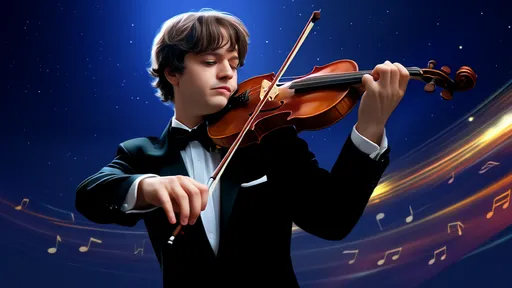
The French school of violin bowing has long been regarded as one of the most sophisticated and influential approaches in classical music. Its emphasis on elegance, precision, and tonal beauty has shaped the way violinists interpret everything from Baroque sonatas to Romantic concertos. Unlike the more forceful German tradition or the virtuosic Russian style, the French bowing technique prioritizes a seamless connection between notes, a refined articulation, and a delicate balance between expressiveness and restraint.
At the heart of French bowing aesthetics lies the concept of le grand détaché, a smooth, sustained stroke that allows the violin to sing with minimal interruption. This technique requires not only impeccable control of the bow arm but also an intimate understanding of how pressure, speed, and contact point interact to produce the desired tone. French pedagogues such as Pierre Baillot and Rodolphe Kreutzer codified these principles in their 19th-century treatises, which remain foundational texts for violinists today.
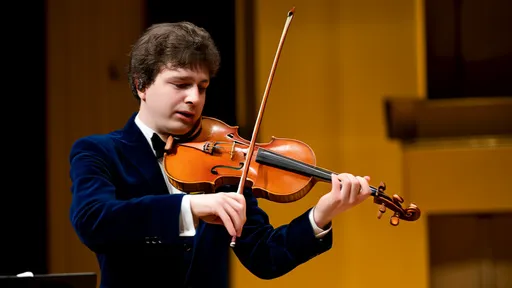
The French approach to bow distribution is particularly noteworthy. Rather than treating the bow as a mere tool for sound production, French players conceive of it as an extension of their musical phrasing. Each section of the bow—from the frog to the tip—is employed with intentionality, allowing for subtle dynamic shifts and nuanced articulation. This philosophy is evident in the works of composers like Debussy and Ravel, whose scores demand a palette of colors achievable only through meticulous bow control.
Another defining characteristic is the use of portato and louré strokes, which occupy a middle ground between legato and staccato. These techniques, often described as "breathed" bowings, create a sense of elasticity in melodic lines. When applied to French repertoire, such as Fauré’s Berceuse or Saint-Saëns’ Introduction and Rondo Capriccioso, they evoke a distinctly Gallic sensibility—lyrical yet never overly sentimental.
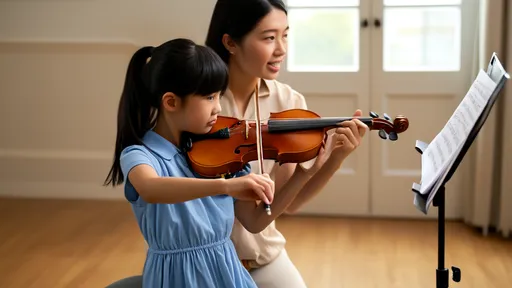
The role of the wrist and fingers in French bowing cannot be overstated. While the arm provides the primary motion, the wrist acts as a shock absorber, ensuring that bow changes remain imperceptible. Meanwhile, the fingers subtly adjust the angle and pressure to accommodate string crossings and shifts in dynamics. This refined mechanics produce what Parisian critics once called "le son français"—a luminous, carrying tone that projects effortlessly even in large concert halls.
Historical context is essential to understanding this tradition. During the 18th and 19th centuries, French luthiers like François Tourte perfected the modern bow design, enabling greater flexibility and responsiveness. Simultaneously, the Paris Conservatoire became a hub for violin pedagogy, systematizing techniques that prioritized clarity over showmanship. This cultural ecosystem fostered players like Jacques Thibaud and Zino Francescatti, whose recordings still serve as masterclasses in French bowing artistry.
Contemporary violinists face the challenge of preserving this legacy while adapting to evolving musical tastes. Some, like Renaud Capuçon, consciously emulate the porté style of earlier generations, while others integrate French principles into broader technical frameworks. What remains unchanged is the belief that bowing is not merely a means to an end but a language unto itself—one that speaks through the whisper of a near-weightless up-bow or the resonant depth of a full down-bow.
In an era where technical prowess often overshadows stylistic nuance, the French bowing tradition offers a reminder that true artistry lies in the details. Whether in the poised elegance of a Mozart phrase or the shimmering textures of Impressionism, its influence endures as a testament to the pursuit of beauty through disciplined refinement.