Rhythm Restoration in Chinese Gugong Music Notation
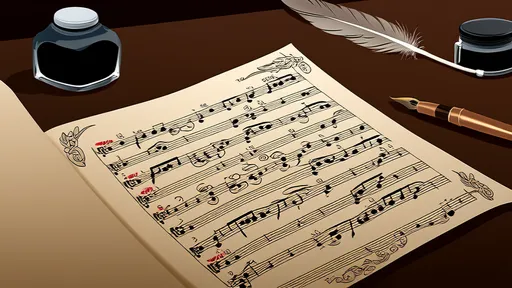
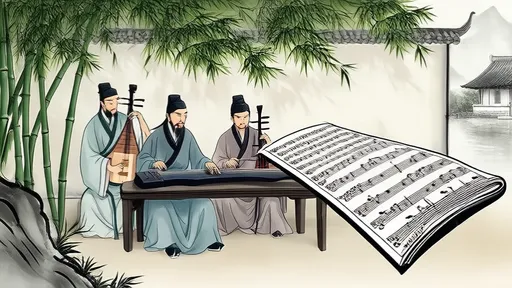
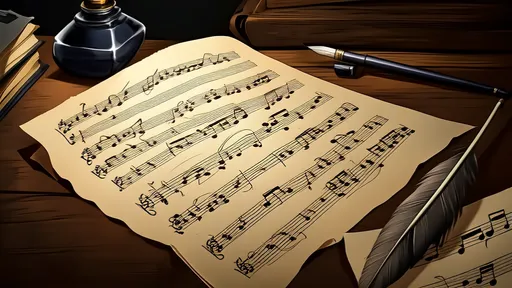
The ancient Chinese musical notation system known as Gongchepu has long fascinated scholars and musicians alike. Unlike Western notation, which relies on a staff and clefs, Gongchepu uses Chinese characters to represent pitch and employs a unique set of symbols to indicate rhythm. The system, which dates back to the Tang Dynasty, was widely used in traditional Chinese opera and ensemble music. Today, there is a growing interest in reconstructing and performing music based on Gongchepu manuscripts, a process that involves deciphering its rhythmic codes to bring centuries-old compositions back to life.
One of the most intriguing aspects of Gongchepu is its rhythmic notation. While the pitch is relatively straightforward to interpret—each character corresponds to a specific note—the rhythm is often implied rather than explicitly notated. This ambiguity has led to debates among musicologists about how to accurately recreate the tempo and phrasing of historical pieces. Some scholars argue that the rhythm was passed down orally, while others believe that subtle markings within the notation provide clues. The challenge lies in reconciling these interpretations to produce performances that honor the original intent of the composers.
The revival of Gongchepu has gained momentum in recent years, thanks in part to collaborations between musicians and researchers. By combining historical analysis with practical experimentation, they have developed methods to approximate the rhythmic structures of ancient music. For instance, certain recurring patterns in the notation may suggest a consistent meter, while variations in character spacing could indicate tempo changes. These insights have allowed contemporary ensembles to perform pieces from the Ming and Qing Dynasties with a level of authenticity that was previously unattainable.
Another factor driving the reconstruction of Gongchepu rhythms is the increasing availability of digitized manuscripts. Libraries and cultural institutions in China have begun scanning and cataloging their collections, making it easier for researchers to compare different versions of the same piece. This has revealed regional variations in rhythmic interpretation, shedding light on how musical practices evolved across time and geography. For example, a score from Fujian might use slightly different symbols than one from Beijing, reflecting local performance traditions. Such discoveries underscore the richness of China's musical heritage and the importance of preserving these nuances.
Despite these advances, the process of reconstructing Gongchepu rhythms remains an art as much as a science. Musicians often rely on their intuition and familiarity with traditional styles to fill in the gaps left by the notation. This interpretive flexibility allows for creative expression but also raises questions about historical accuracy. Should modern performers adhere strictly to the available evidence, or are they free to improvise within the framework of the notation? The answer likely lies somewhere in between, balancing scholarly rigor with artistic sensibility.
The global interest in Gongchepu reflects a broader appreciation for non-Western musical traditions. As audiences become more curious about diverse cultural expressions, the demand for authentic performances of ancient Chinese music has grown. Workshops and concerts featuring reconstructed Gongchepu pieces have attracted attendees from around the world, fostering cross-cultural dialogue. This international engagement not only validates the efforts of researchers but also ensures that Gongchepu will continue to be studied and performed for generations to come.
Looking ahead, the study of Gongchepu rhythms promises to yield even deeper insights into China's musical past. Advances in technology, such as artificial intelligence, may soon enable more precise analysis of rhythmic patterns, potentially uncovering hidden consistencies in the notation. Meanwhile, the dedication of musicians and scholars ensures that this ancient system will remain a vibrant part of contemporary musical practice. By bridging the gap between past and present, Gongchepu offers a unique window into the sounds of history, inviting us to listen with fresh ears.